



Navigating the Labyrinth of Worst-Case Scenarios: Understanding and Overcoming Catastrophizing
It’s a common human experience for our thoughts to occasionally drift into unsettling possibilities. However, for some, this mental wandering can transform into an overwhelming preoccupation with potential disasters, imagining the most dire outcomes in nearly every situation until it feels utterly unmanageable. Consider a loved one running a few minutes late; before you know it, your mind might race to visions of accidents and even funeral arrangements. This pervasive style of thinking is known as Catastrophizing.
Catastrophizing can profoundly impact our mental well-being, casting a shadow of anxiety and fear over daily life. In this comprehensive guide, we will delve into what Catastrophizing entails, explore the reasons behind this common thought pattern, and provide vivid examples to illustrate its manifestation. Crucially, we will also equip you with practical strategies and insights into effective professional mental health support that can help you break free from its grip.
What is Catastrophizing?
Catastrophizing describes a cognitive distortion where individuals habitually predict the worst possible outcome in a given situation, often regardless of how improbable that outcome may be. Imagine it as a mental snowball effect: a minor worry begins its descent, gathering speed and mass until it transforms into an overwhelming avalanche of anxiety and fear, far disproportionate to the initial trigger. This thought pattern can ensnare the mind in a cycle of negativity.
Catastrophizing primarily manifests in two distinct forms:
- Magnification (Current Catastrophizing): This occurs when a person exaggerates the negative aspects or consequences of a current, existing situation, blowing a minor issue completely out of proportion.
- Future Catastrophizing (Fortune-Telling): This involves projecting catastrophic scenarios onto future events, envisioning the most dreadful possible outcomes before they even have a chance to unfold.
Both forms of Catastrophizing can be deeply distressing, fueling the development or exacerbation of mental health problems such as generalized anxiety disorder and depression. For individuals already grappling with existing mental health challenges, Catastrophizing can intensify symptoms, making the journey toward mental well-being even more arduous. Recognizing this deeply ingrained thought pattern is the first vital step towards regaining control over your mental landscape.
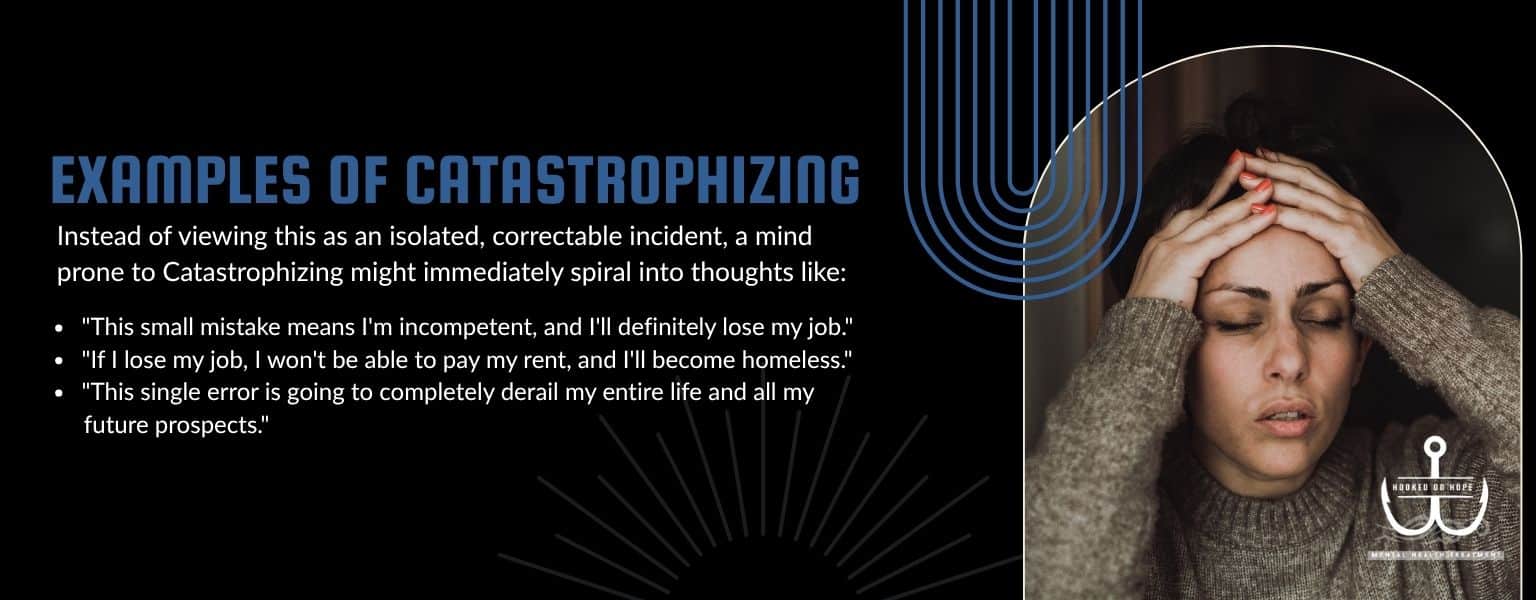
Examples of Catastrophizing
Catastrophizing takes a small, manageable event and transforms it into an all-consuming crisis. Let’s consider a common scenario: you’ve made a minor oversight at work.
Instead of viewing this as an isolated, correctable incident, a mind prone to Catastrophizing might immediately spiral into thoughts like:
- “This small mistake means I’m incompetent, and I’ll definitely lose my job.”
- “If I lose my job, I won’t be able to pay my rent, and I’ll become homeless.”
- “This single error is going to completely derail my entire life and all my future prospects.”
This is a quintessential illustration of Catastrophizing. What many would consider a small, reasonably insignificant event rapidly spirals into something critical, overwhelming, and intensely anxiety-inducing. The mind leaps from a minor misstep to an irreversible personal disaster.
The pervasive nature of Catastrophizing means it can infiltrate and negatively affect nearly every aspect of life, impacting relationships, physical health, career progression, and even the simplest daily tasks. Developing the ability to identify this destructive thought pattern is fundamental to learning how to manage it effectively.
Here are some more pervasive examples of how Catastrophizing can manifest in various areas of life:
- Health Worries: Experiencing a mild ache or a common symptom, such as a dull headache or a fleeting chest sensation, and immediately concluding it must be a definitive sign of a severe, life-threatening illness (e.g., “This headache means I have a brain tumor,” or “This chest pain is surely a heart attack”). This is particularly common in health anxiety.
- Relationship Concerns: If a friend or partner is slow to respond to a message, or cancels plans at the last minute, Catastrophizing might lead to assumptions that they no longer care, are secretly angry, or that the friendship/relationship is inevitably doomed and you’ll end up completely alone.
- Academic or Career Setbacks: Receiving a critical review on a project or a lower-than-expected grade can trigger thoughts like, “This failure means I’m unintelligent and will never succeed in my career/studies,” projecting an immediate and absolute failure onto all future endeavors.
- Social Interactions: Making a minor social faux pas, like stumbling over words during a conversation, can spiral into believing that everyone present now views you as awkward and pathetic, and that you’ll always be socially rejected.
- Financial Anxiety: A small unexpected bill or a minor car repair could lead to intense worry that it’s the beginning of inevitable bankruptcy and complete financial ruin, even if you have sufficient savings.
- Future Projections: Anticipating a minor inconvenience, such as a traffic delay on the way to an important appointment, can immediately transform into visions of missing the meeting entirely, losing a significant opportunity, and suffering irreversible career damage. This demonstrates future catastrophizing at play.
Why Do We Catastrophize? The Roots of Worst-Case Thinking
There isn’t a single, definitive cause for why individuals engage in Catastrophizing. More often, it stems from a complex interplay of various contributing factors, including learned behaviors, past experiences, and innate human survival mechanisms. Understanding these roots is key to untangling the thought patterns and addressing them effectively in mental health treatment.
For some, Catastrophizing may be a deeply ingrained, learned response, shaped by early life experiences or childhood environments. Growing up in unpredictable or traumatic settings, for instance, might teach a person that anticipating the worst is a way to prepare for potential threats, or even a desperate attempt to regain a sense of control in a world that felt overwhelming. It can serve as a protective mechanism, albeit a maladaptive one, to brace oneself for disappointment or hurt, particularly after experiencing significant trauma. This link highlights why trauma-informed care is often vital in mental health support.
Beyond learned behaviors, our very biology plays a role. As humans, we are naturally wired to pay more attention to perceived threats or negative information. This inherent bias is deeply linked to our primitive ‘fight or flight’ response, an innate survival mechanism honed over millions of years of evolution. In modern life, this ancient wiring can sometimes misfire, fueling Catastrophizing, especially during times of stress, uncertainty, or when feeling a lack of control.
Other significant explanations and contributing factors for why we Catastrophize include:
- Perfectionism and Rigid Expectations: Striving for absolute perfection and holding oneself to excessively rigid standards can lead to an exaggerated fear of failure or making mistakes. When even minor imperfections occur, a perfectionist mind is more prone to Catastrophizing, believing a small flaw signifies complete incompetence or ruin.
- Chronic Negative Thinking Patterns: If an individual has a long-standing habit of dwelling on negative thoughts, or has experienced recurrent past traumatic events, Catastrophizing can become their default coping mechanism. It transforms into a way of constantly anticipating and mentally preparing for an upcoming threat, trapping them in a cycle of apprehension.
- Uncertainty and Perceived Lack of Control: When confronted with situations that are inherently uncertain or feel beyond one’s control, Catastrophizing can paradoxically offer a false sense of control. By mentally rehearsing worst-case scenarios, individuals might feel they are “prepared” for anything, even if this preparation only generates more anxiety.
Catastrophizing is also widely associated with and can be a core symptom of a variety of mental health disorders, underscoring the need for professional assessment and comprehensive mental health treatment:
- Anxiety Disorders: Individuals who Catastrophize are significantly more likely to struggle with various anxiety disorders, including Generalized Anxiety Disorder (GAD), Panic Disorder, and Social Anxiety Disorder. For example, Catastrophizing about one’s health (e.g., a cough means fatal illness) is a hallmark symptom of health anxiety. This strong link is supported by numerous studies, highlighting how this thought pattern fuels intense worry and fear.
- Depression: Catastrophizing can directly contribute to feelings of hopelessness, excessive guilt, worthlessness, and other common symptoms of depression. The constant focus on negative outcomes can create a pervasive sense of despair, making it difficult to find motivation or see positive possibilities. Research, such as a 2012 study in Cognitive Therapy and Research, has found Catastrophizing to be a predictor of depressive and anxious symptoms, especially in younger populations.
- Post-Traumatic Stress Disorder (PTSD): For someone with PTSD, past traumatic experiences can deeply ingrain the belief that worst-case scenarios are not only possible but likely. They may view their trauma as undeniable evidence that extreme danger can occur, leading to a heightened state of vigilance and Catastrophized thinking about future safety. A study published in Clinical Psychological Science revealed that individuals with higher levels of catastrophic thinking were substantially more likely to develop PTSD after traumatic events.
- Obsessive-Compulsive Disorder (OCD): The persistent, intrusive negative thoughts characteristic of OCD obsessions can frequently spiral into Catastrophizing. Individuals with OCD may imagine dire consequences if their compulsions are not performed, or if their intrusive thoughts somehow come true, fueling the compulsive behaviors.
The Impact of Catastrophizing on Daily Life and Well-being
While a natural human tendency to consider potential risks, unchecked Catastrophizing can have a profound and detrimental impact on an individual’s daily functioning and overall mental well-being. Its insidious nature can subtly erode confidence, stifle opportunities, and create a pervasive sense of dread.
Some key areas where Catastrophizing takes a heavy toll include:
- Emotional Distress: The constant anticipation of negative outcomes leads to chronic anxiety, stress, fear, and sadness. This emotional burden can be exhausting, depleting mental energy and making it difficult to experience joy or relaxation.
- Decision Paralysis: The fear of making the “wrong” choice, fueled by imagining dire consequences, can lead to indecision and procrastination. Individuals may avoid making choices altogether, leading to missed opportunities in their personal and professional lives.
- Physical Health: Chronic stress induced by Catastrophizing can manifest physically. It can contribute to tension headaches, digestive issues, sleep disturbances, fatigue, and can even exacerbate existing medical conditions, creating a vicious cycle between mind and body.
- Relationship Strain: Constant worrying and negative predictions can put a strain on interpersonal relationships. Friends and family may feel overwhelmed by the negativity, or find it difficult to reassure someone who consistently anticipates the worst, leading to emotional distance.
- Reduced Quality of Life: The inability to enjoy the present moment, coupled with constant worry about the future, significantly diminishes overall life satisfaction. Simple pleasures become overshadowed by apprehension, and new experiences may be avoided entirely.
- Lowered Self-Esteem: Repeatedly believing oneself incapable of handling perceived disasters can erode self-confidence and foster a sense of powerlessness, reinforcing the belief that one is always on the brink of failure.
Recognizing these impacts is a powerful motivator for seeking mental health support and learning effective strategies to manage and overcome Catastrophizing.

How to Stop Catastrophizing: Strategies for Mental Well-being
Overcoming Catastrophizing requires a conscious effort to challenge entrenched thought patterns and cultivate new ways of responding to uncertainty. Both self-guided techniques and professional mental health treatment can be highly effective in fostering a more balanced and hopeful outlook.
Self-Guided Techniques for Managing Catastrophic Thinking
Incorporating these exercises and lifestyle changes into your daily routine can help you develop a more positive and resilient mindset:
- Mindfulness and Grounding: The core of these practices is to anchor yourself in the present moment, rather than allowing your mind to wander into future worries. Techniques such as deep breathing exercises, focused meditation (paying attention to sensations, sounds, or your breath), and grounding exercises (e.g., the 5-4-3-2-1 technique: naming 5 things you can see, 4 you can touch, 3 you can hear, 2 you can smell, 1 you can taste) can effectively pull your focus away from escalating thoughts.
- Thought-Stopping and Postponement: When you become aware that you are beginning to Catastrophize, mentally (or even verbally) command yourself to “Stop!” Then, consciously attempt to shift your focus to something positive, neutral, or a task that demands your full attention. Alternatively, you can use the “worry time” technique: designate a specific, limited period later in the day (e.g., 6 PM for 20 minutes) for worrying. Each time a catastrophic thought arises outside this window, gently remind yourself, “I’ll deal with that later, during my worry time.” Often, by the time the designated period arrives, the worries may have dissipated or seem far less significant.
- Challenge Your Thoughts (Basic Cognitive Restructuring): When a catastrophic thought arises, pause and question its validity. Ask yourself:
- “Is this thought 100% true, or is it a possibility I’m exaggerating?”
- “What is the actual evidence for this worst-case scenario?”
- “What’s the most likely outcome, not just the worst?”
- “How have I handled similar situations in the past?”
- “What would I tell a friend who had this exact thought?”
- Self-Care Practices: Prioritizing your physical well-being directly impacts your mental resilience. Regular physical exercise (even a brisk walk), maintaining a balanced and nutritious diet, and ensuring you get adequate, consistent sleep can significantly help manage stress, reduce anxiety, and enhance your emotional regulation. When your body feels better, your mind is often better equipped to resist negative thought patterns.
- Limit Exposure to Negative Triggers: Be mindful of news consumption (especially sensationalized headlines), social media feeds, or even conversations that consistently highlight worst-case scenarios. While staying informed is important, excessive exposure can fuel a Catastrophizing mindset.
Professional Treatment and Support for Catastrophizing
If your Catastrophizing is severely impacting your daily life, feels uncontrollable, or if you suspect it might be a symptom of a more serious underlying mental health disorder, it is a strong indication that professional mental health treatment options should be explored. Remember, seeking help is a sign of strength and a proactive step towards greater mental well-being.
Here are some potential mental health support treatments for catastrophic thinking:
Therapy:
- Cognitive Behavioral Therapy (CBT): This is one of the most effective and evidence-based talking therapies for individuals prone to Catastrophizing. CBT involves cognitive restructuring (often called reframing), which helps you systematically identify negative and distorted thought processes. A therapist will guide you to challenge these thoughts, examine the evidence for and against them, and then develop more realistic and positive alternative interpretations. Through CBT, you learn to break the link between a triggering event and an automatic catastrophic response.
- Acceptance and Commitment Therapy (ACT): ACT helps individuals develop psychological flexibility. Instead of fighting or eliminating catastrophic thoughts, ACT teaches acceptance of these internal experiences and commits to actions that align with personal values, even when discomfort is present. It focuses on mindfulness and living a full life despite difficult thoughts.
- Exposure Therapy (for specific anxieties/phobias): If Catastrophizing is linked to specific fears (e.g., health anxiety, social phobia), controlled exposure to the feared situation, alongside therapeutic guidance, can help reduce the anxiety response and challenge catastrophic predictions in a safe environment.
Medication:
If your Catastrophizing is significantly linked to or is a symptom of an underlying mental health condition such as anxiety disorder, depression, PTSD, or OCD, a psychiatrist might prescribe medication. These medications (e.g., antidepressants, anti-anxiety medications) can help regulate brain chemistry, reduce the severity of symptoms, and make it easier for individuals to engage effectively in therapy and develop new coping mechanisms. Medication is often most effective when used in conjunction with therapy.
Hooked on Hope Mental Health: Your Partner in Overcoming Catastrophizing
If Catastrophizing is having a severe effect on your day-to-day life, causing significant distress, or if you feel it might be connected to a deeper mental health disorder, know that comprehensive mental health treatment and unwavering support for mental health are readily available.
At Hooked on Hope Mental Health, our team of dedicated mental health experts specializes in understanding the intricate reasons behind Catastrophizing and empowering individuals with effective, sustainable coping strategies. We utilize evidence-based therapies like CBT and other tailored interventions to help you identify, challenge, and ultimately change these harmful thought patterns. Our goal is to equip you with the tools to manage your mindset more effectively, fostering resilience and building a more positive mental outlook for the future. We believe in providing holistic mental health support that addresses your unique needs.
Don’t let the shadow of worst-case scenarios dictate your life. Contact Hooked on Hope Mental Health today at 470-287-1927 or fill out our online contact form to find out how our compassionate outpatient mental health treatment in Atlanta, GA can help you overcome Catastrophizing and build a path toward greater mental well-being and lasting hope.
Catastrophizing Frequently Asked Questions
What exactly does Catastrophizing mean?
Catastrophizing is a thinking pattern where a person anticipates the absolute worst possible outcome in any given situation, regardless of how unlikely it is. It’s like taking a small worry and escalating it into a major disaster in your mind.
Is Catastrophizing a recognized mental health condition?
Catastrophizing itself is not a standalone mental health diagnosis. However, it is a common cognitive distortion and a significant symptom or contributing factor in various mental health conditions, particularly anxiety disorders, depression, PTSD, and OCD.
How does Catastrophizing affect my daily life?
Catastrophizing can lead to chronic anxiety, stress, and emotional exhaustion. It can cause indecision, disrupt sleep, strain relationships, impact physical health through chronic stress, and generally diminish your enjoyment of life as you constantly anticipate negative events.
Why do some people Catastrophize more than others?
There are multiple reasons, including learned behaviors from past experiences (especially trauma), an innate human tendency to focus on threats, perfectionistic tendencies, existing negative thinking patterns, and a need to feel a false sense of control in uncertain situations. It’s also strongly linked to specific mental health disorders.
Can Catastrophizing be overcome with self-help techniques?
For many, self-guided techniques like mindfulness, deep breathing, thought-stopping, challenging negative thoughts, and practicing self-care can be very helpful. However, if Catastrophizing is severe or linked to an underlying mental health condition, professional therapy and support are often necessary.
What type of therapy is most effective for Catastrophizing?
Cognitive Behavioral Therapy (CBT) is widely considered one of the most effective therapies for Catastrophizing. It helps individuals identify, challenge, and reframe negative thought patterns into more realistic and positive ones. Other therapies like Acceptance and Commitment Therapy (ACT) can also be beneficial.
Is medication ever used to treat Catastrophizing?
Medication is not typically prescribed directly for Catastrophizing. However, if Catastrophizing is a symptom of an underlying mental health condition like a severe anxiety disorder or depression, a psychiatrist might prescribe medication (e.g., antidepressants, anti-anxiety medications) to help manage those core symptoms, which can in turn reduce catastrophic thinking.
When should I seek professional help for Catastrophizing?
It’s advisable to seek professional help if Catastrophizing feels uncontrollable, significantly interferes with your daily life (e.g., work, relationships, sleep), causes extreme emotional distress, or if you suspect it might be part of a broader mental health disorder. A mental health professional can provide an accurate assessment and tailored treatment plan.