


Have you ever wondered if the challenges you face might be connected to experiences from previous generations? Many people ask, “Is generational trauma real?” The answer is a resounding yes. Generational trauma refers to the profound psychological and emotional effects of traumatic events that are passed down through families, impacting individuals who didn’t directly experience the original trauma.
Even without firsthand experience, descendants can exhibit emotional or psychological symptoms linked to these past events. This often happens as they learn fears, responses, and coping mechanisms from caregivers who were directly affected. While sometimes called “family trauma,” generational trauma can also describe the collective impact on any bonded community that experiences traumatic events or behaviors, even if direct blood relation isn’t present.
The psychological and emotional repercussions of traumatic events can ripple through time, conveyed through behaviors, unspoken rules, and learned responses stemming from a foundational sense of unsafety or instability. These effects often create intense challenges for future generations and can persist for centuries if left unaddressed. You might observe generational trauma in families whose ancestors endured widespread oppression, systemic racism, discrimination, or pervasive violence.
At Hooked on Hope Mental Health, we understand the deep roots of inherited pain. We are dedicated to providing comprehensive residential addiction treatment and mental health support that addresses these complex dynamics, helping individuals and families embark on a journey of healing and breaking the cycle of generational trauma.
Is Generational Trauma Real? The Science and Experience
Yes, is generational trauma real? Absolutely. Research confirms that the profound effects of trauma can indeed be passed down to subsequent generations. This phenomenon is often referred to as transgenerational trauma. This is not merely a theoretical concept; transgenerational trauma is a recognized reality that imposes devastating effects on individuals and their family systems. While mental and emotional struggles are sometimes minimized by those who haven’t experienced them firsthand, both documented personal accounts and robust scientific research unequivocally demonstrate that the shockwaves left by traumatic experiences can continue to resonate far beyond one lifetime. This confirms that the concept of intergenerational trauma is backed by both lived experience and scientific understanding.
Uncovering and Addressing Generational Trauma
Identifying generational trauma in individuals often involves recognizing various symptoms such as chronic anxiety, persistent depression, low self-esteem, or engagement in self-destructive behaviors. Within families, relationships impacted by generational trauma may exhibit patterns of codependency or unhealthy attachment styles. These dysfunctional family dynamics can inadvertently perpetuate the effects of the original trauma, making it harder for successive generations to break free.
To begin the process of uncovering generational trauma, the first crucial step is to identify the source of these traumatic responses. Understanding where the pain originates can be challenging, especially when sources of generational trauma, such as systemic discrimination, are deeply embedded and difficult to uproot, even after they’ve been acknowledged.
The second vital step is to non-judgmentally acknowledge the trauma and its profound impact on your life. Feelings of guilt or shame often accompany inherited trauma and can unfortunately exacerbate existing symptoms, making healing more difficult.
Finally, it is essential for individuals, families, and communities experiencing the collateral effects of generational trauma to seek professional support. This could manifest as family therapy under the guidance of a psychiatrist or a specialized trauma therapist, or individual therapy focusing on trauma-informed care. Through professional guidance, individuals can learn effective coping strategies, develop healthier emotional regulation skills, and find robust support systems. With consistent effort and the right help, it truly becomes possible to heal from the pervasive legacy of trauma.
What Does Generational Trauma Feel Like? Personal Impact
The experience of generational trauma is deeply personal and can manifest differently for each individual. However, common emotional landscapes may include profound difficulty trusting others, an overwhelming sense of hopelessness about the future, or pervasive feelings of anxiety and depression. It’s also crucial to understand that the impact of generational trauma can evolve within the same person at different stages of life.
For example, the influence of unhealthy family dynamics rooted in generational trauma will likely present very differently in a young child compared to how it appears in an adolescent, or in an adult who has left the family home. The specific ways in which inherited pain expresses itself can shift, but its underlying presence remains until addressed.
Does Every Family Experience Generational Trauma?
No, not every family experiences generational trauma. However, the prevalence of generational trauma might be higher than many people realize. It doesn’t always stem from one singular, monumental traumatic event. Instead, it can also arise in families that exhibit consistent patterns of abuse or have endured prolonged, complex trauma from ongoing stressors like economic instability, chronic illness, or persistent domestic conflict.
Sometimes, the effects of generational trauma can persist even as individuals actively attempt to push them away or move beyond them. In these scenarios, family members who are recovering and striving to break the generational cycle may experience a form of survivor’s guilt, feeling conflicted about forging a healthier path that diverges from the one their ancestors endured. This highlights the deep psychological imprints that make healing generational trauma a complex, multifaceted journey.
How Is Trauma Passed Down Through Generations? The Mechanisms
The transmission of intergenerational trauma is believed to occur through both biological and cultural pathways. One prominent theory suggests that the effects of trauma can be passed down through epigenetic changes to a person’s DNA after they experience trauma. These effects, known as “epigenetic changes,” don’t alter the underlying DNA sequence itself but rather modify how genes are expressed. Research indicates that DNA can “remember” traumatic experiences, then pass down the effects of those experiences to multiple generations. However, it’s important to clarify that DNA does not carry explicit memories of events and emotions in the same way the mind does; rather, it influences stress responses and vulnerabilities.
Think of it this way: just as a tree might “remember” the cut of an ax by growing with a visible scar or altered pattern, future generations can carry the “scars” or predispositions linked to generational trauma even if they did not directly experience the initial event.
The legacy of trauma can also be transmitted culturally. Over time, family members or community members might internalize and learn unhealthy coping behaviors, communication patterns, or emotional responses from their parents or other influential figures. They may then unconsciously imitate these behaviors and, in turn, teach these patterns to their own children, perpetuating a cycle of learned responses to unhealed pain. This multifaceted transmission explains how to break generational trauma requires addressing both genetic predispositions and learned behaviors.
Causes and Course of Intergenerational Trauma
The primary causes of intergenerational trauma often stem from three main categories: extreme, singular events; patterns of chronic abuse; or prolonged periods of systemic discrimination and suffering. However, any type of significant trauma can trigger pervasive generational impacts, depending on how the initial victims learned to cope with its effects.
Common causes that can lead to intergenerational trauma include:
- Domestic violence
- Childhood trauma (e.g., neglect, abuse)
- Physical, emotional, or sexual abuse
- Oppression and systemic injustice
- Racism
- War and conflict
- Religious trauma (spiritual abuse or harmful doctrines)
- Natural disasters
- Genocide or historical atrocities like slavery
The typical course of intergenerational trauma frequently begins with adverse childhood experiences, such as child abuse. These experiences profoundly impact how the victims grow up to care for and educate the next generation. As victims mature into adulthood, their childhood trauma directly influences their decisions, their emotional responses, and even the way they perceive and handle relationships.
When these individuals begin to form families or communities of their own, they often carry with them the “survival skills” they were forced to acquire while growing up in unsafe or unstable environments. These survival skills, while adaptive in the face of original trauma, can manifest as traits like hyper-vigilance, excessive people-pleasing, chronic defensiveness, or emotional numbness. As these individuals become parents and leaders, the collective trauma and its pervasive effects are then inadvertently passed down to their children, their children’s children, and so on, creating a continuous cycle until intervention occurs. This deep understanding is crucial for anyone wondering how to break generational trauma.
Understanding the Effects and Symptoms of Generational Trauma
Generational trauma manifests through various observable signs in individuals and families.
Evidence of its presence can include:
- Codependency: Unhealthy reliance on others for self-worth and decision-making.
- Unhealthy attachment styles: Difficulty forming secure, trusting relationships.
- Hypervigilance: An extreme state of alertness, constantly scanning for threats.
- Difficulty trusting others: A pervasive sense of suspicion or inability to rely on others.
- Mental health conditions: Higher rates of anxiety, depression, or PTSD.
- Substance abuse: Turning to drugs or alcohol to cope with unaddressed pain.
These patterns often become embedded as generational trauma patterns or cycles of trauma. These are unhealthy behaviors and relationship styles that are passed down through families when the initial trauma is not properly healed. When a closely-knit group experiences significant trauma, like abuse, violence, or systemic discrimination, the profound emotional impact can inadvertently affect future generations, even if they didn’t directly experience the initial traumatic event themselves.
Common generational trauma patterns include:
- Avoiding emotions: Family members may consistently avoid talking about feelings or the original trauma, leading to widespread emotional suppression. Without healthy examples of emotional communication, subsequent generations are likely to continue suppressing their own emotions, creating a cycle of emotional disconnect.
- Unhealthy coping mechanisms: This can manifest as substance abuse, aggression, self-harm, or withdrawing from others as ways to manage stress or pain. These behaviors can quickly develop into cycles of anger, resentment, and distrust throughout multiple generations of a family or community.
- Trust and relationship issues: Individuals may struggle significantly to form healthy, secure relationships due to unresolved trauma, impacting connections with parents, partners, and children. Family members often unknowingly follow the same dysfunctional patterns as their parents or grandparents, even without consciously realizing they are mirroring those behaviors.
It is incredibly challenging to break the cycle of generational trauma because it is often deep-rooted and pervasive, affecting multiple aspects of a person’s life, especially when the trauma has impacted an entire community. When everyone around them is using the same unhealthy ways of communicating and processing their emotions, it becomes nearly impossible for a young member of a traumatized community to learn a healthier path without external intervention and support.
However, it is always possible to break these patterns and achieve healing from the trauma that has been present throughout the history of your family and community. Finding support groups and exploring therapy options can help you gain an objective perspective, stepping outside the distorted lens of generational trauma to help you develop the necessary skills for a healthier life.
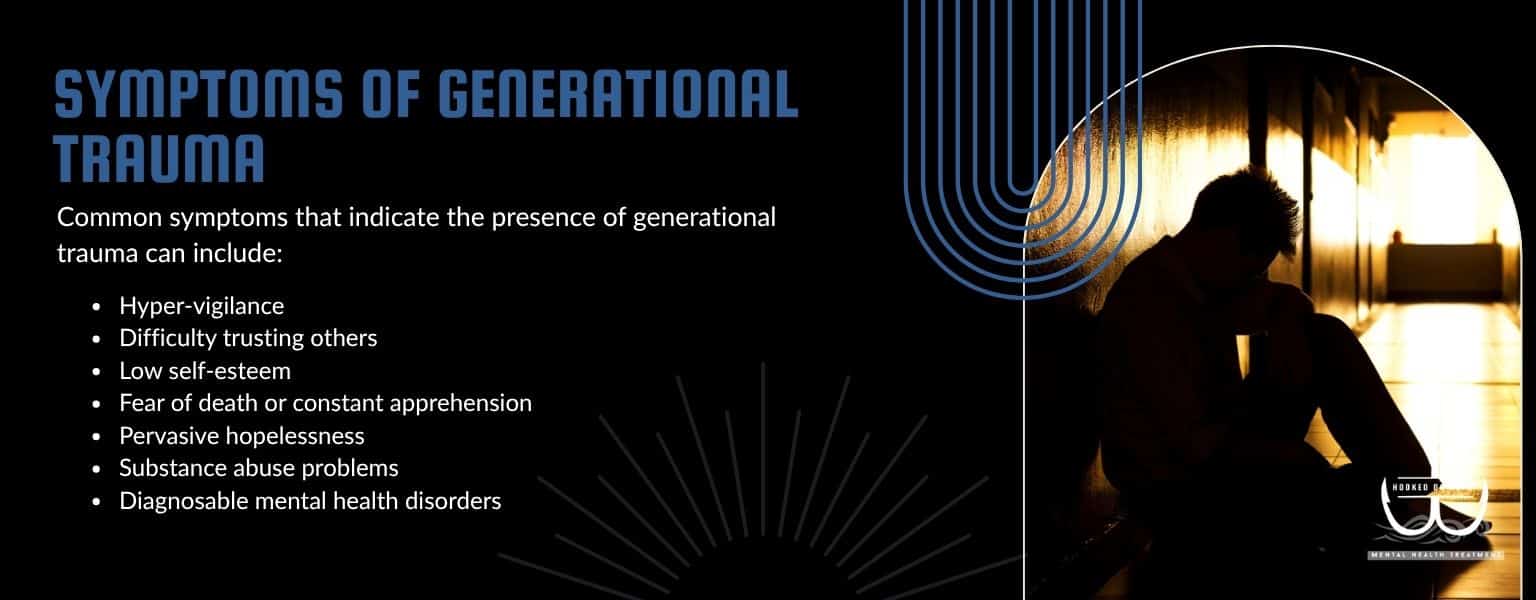
Common symptoms that indicate the presence of generational trauma can include:
- Hyper-vigilance
- Difficulty trusting others
- Low self-esteem
- Fear of death or constant apprehension
- Pervasive hopelessness
- Substance abuse problems
- Diagnosable mental health disorders (e.g., anxiety, depression, PTSD)
These symptoms can be observed across multiple generations, even if their specific behaviors or intensity differ based on personal circumstances. While there are many symptoms, five distinct ones are very common in traumatized families and communities: difficulty processing and communicating emotions, pervasive anxiety, chronic depression, persistent low self-esteem, and social isolation.
Examples and Consequences of Generational Trauma
What counts as generational trauma? It happens when traumatic experiences and their profound effects are transmitted from one generation to another. This type of trauma can be incredibly diverse and unique to different individuals and groups of people. While an experience might not appear severely traumatic from an outside perspective, the mental, emotional, and interpersonal damage for those affected can be very real and deeply impactful. Some individuals may experience generational trauma stemming from a single, overwhelming incident, while others might inherit it from long and repeated experiences of various traumatic events.
One of the most well-documented and impactful cases of generational trauma dates back to the mass enslavement of African Americans. The systemic violence, brutal oppression, pervasive discrimination, and entrenched racism endured by African Americans for generations have had profound and lasting impacts on individuals within the community. Descendants of enslaved peoples frequently experience higher rates of fear, pervasive hopelessness, chronic anger, anxiety disorders, helplessness, and various mental health problems.
Another poignant example of generational trauma is seen in the children of Holocaust survivors who experience extreme stress and psychological challenges that extend beyond their personal life experiences. For instance, they may exhibit survivalist behaviors, such as hoarding resources or extreme vigilance, even though they are generationally removed from the Holocaust itself. This is a clear illustration of how historical trauma can manifest.
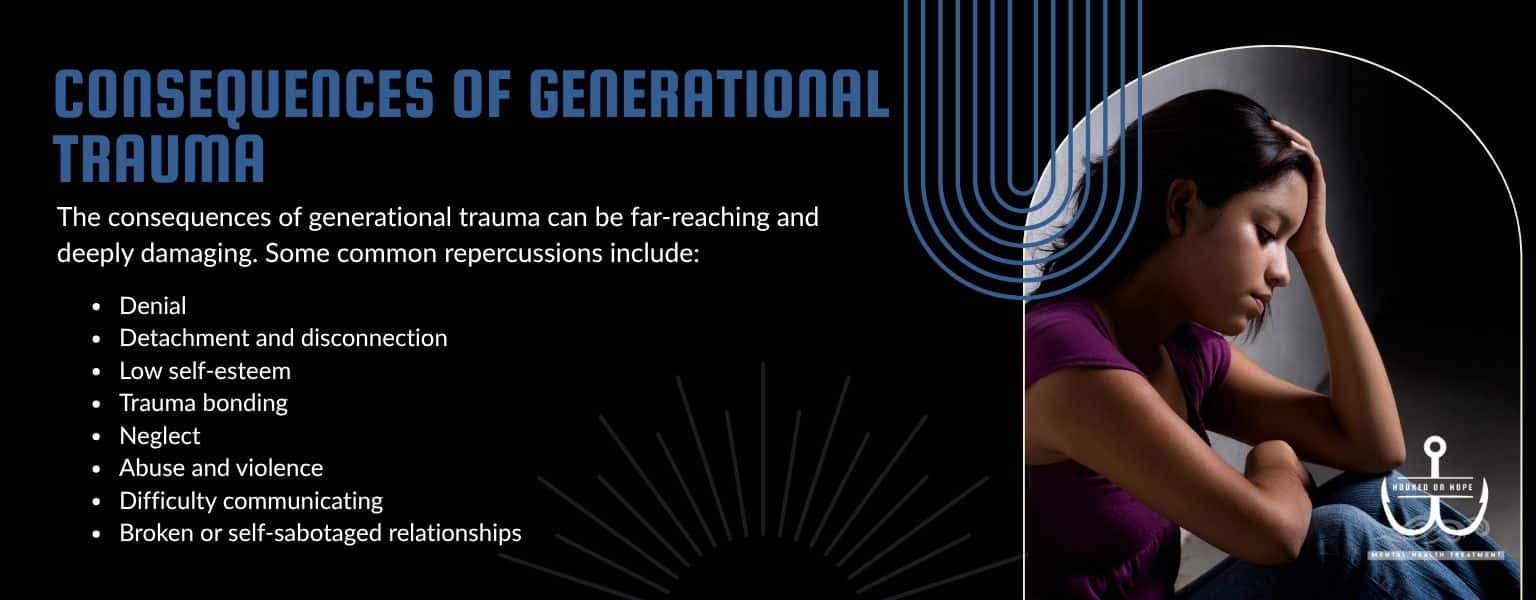
The consequences of generational trauma can be far-reaching and deeply damaging. Some common repercussions include:
- Denial: A pervasive inability or unwillingness to acknowledge the trauma or its impact.
- Detachment and disconnection: Emotional numbness or difficulty forming deep connections with others.
- Low self-esteem: A fundamental sense of unworthiness or inadequacy.
- Trauma bonding: Unhealthy emotional attachments to individuals or situations that perpetuate harm.
- Neglect: A pattern of emotional or physical neglect, often stemming from caregivers’ own unhealed trauma.
- Abuse and violence: The perpetuation of abusive or violent behaviors across generations.
- Difficulty communicating: Inability to express needs, feelings, or resolve conflicts constructively.
- Broken or self-sabotaged relationships: A recurring pattern of relationship failures or behaviors that undermine intimacy.
Generational trauma significantly challenges the mental health and overall well-being of those who experience it. It can lead to severe mental health conditions like chronic anxiety, major depressive disorder, and suicidal ideation. If you or a loved one are experiencing suicidal thoughts, please seek help immediately. Know that you are not alone, and support is available. You can call the National Suicide & Crisis Lifeline by dialing 988 or call 911 for immediate assistance.
What are the mental health issues with generational trauma?
Some commonly associated mental health issues include anxiety disorders, depression, and post-traumatic stress disorder (PTSD). Individuals grappling with generational trauma may experience pervasive feelings of shame, helplessness, and profound low self-esteem. They often develop negative thoughts and feelings about themselves and the world around them, shaped by the traumatic experiences they, or their loved ones, have endured. It can also be exceptionally challenging to regulate emotions and manage stress when underlying trauma has been unaddressed and present for so long. Some patterns may feel invisible to those who use them, simply because they have been an ingrained part of their entire lives and the lives of their family members.
The lasting effects of generational trauma also include an increased risk of mental health conditions and substance use problems, including addiction. Prolonged exposure to stress and unhealed trauma can place a person at significant risk for severe mental and physical health conditions. Toxic family dynamics, for example, can create a near-constant emotional and psychological strain on family members, perpetuating the cycle.
Physiological and Neurological Effects:
Beyond psychological impacts, intergenerational trauma can have tangible physiological effects. Both chronic stress and unaddressed trauma can increase an individual’s likelihood of experiencing chronic pain, developing various physical illnesses, and suffering from conditions like heart disease and diabetes. Generational trauma can also lead to unhealthy coping behaviors, including the development of substance use disorders and addiction, as individuals may turn to drugs or alcohol to numb unacknowledged or suppressed feelings and underlying trauma. These coping mechanisms, in turn, can lead to new unhealthy cycles that are then passed down to future generations.
Neurological research also provides insight into intergenerational trauma. As stated in Communications Biology, “Intergenerational trauma increases lifetime susceptibility to depression and other psychiatric disorders.” Over time, chronic stress and unaddressed trauma can literally rewire the brain, altering the activity of crucial systems that profoundly impact a person’s emotional, mental, and physical well-being.
Can you get PTSD from generational trauma?
While PTSD is not directly inherited, generational trauma can indeed lead to symptoms related to post-traumatic stress disorder (PTSD).
Common symptoms of PTSD, which may be observed in individuals affected by inherited trauma, include:
- Agitation and irritability
- Nervousness and anxiety
- Difficulty concentrating or thinking clearly
- Memory problems
- Significant mood swings
- Depression
- Recurrent nightmares related to the trauma
- Unwanted, intrusive memories or flashbacks of the trauma
- Avoidance behaviors (avoiding places, people, or thoughts associated with the trauma)
Breaking Generational Trauma: A Path to Healing
Is it possible to break generational trauma? Yes, it is absolutely possible to break the cycle of generational trauma. However, it takes intense work, unwavering effort, and often professional guidance. To truly break generational trauma, an individual must first understand the underlying problem, learn how to work through its complex manifestations, and develop strategies to prevent and treat the root cause so that these destructive patterns do not continue to impact the next generation.
How to clear ancestral trauma starts with a profound recognition of its influence on your current behaviors, emotions, and relationships. Gaining a deep understanding of your family’s history, including its unspoken narratives and coping mechanisms, is key to identifying precisely how trauma has been passed down through the generations.
Specific therapeutic approaches can be incredibly effective in this process. For example, seeking therapy such as EMDR (Eye Movement Desensitization and Reprocessing) can provide a powerful pathway to process and re-integrate traumatic memories, including those inherited from past generations. Mindfulness practices, such as deep breathing exercises or guided meditation, can significantly increase self-awareness of inherited trauma responses, helping you to observe and choose different reactions. Journaling about family patterns, past experiences, and your emotional responses can also be a profound tool to uncover hidden emotions tied to that trauma. Replacing harmful coping mechanisms—such as avoiding emotions, engaging in self-sabotage, or using substances to numb pain—with healthier habits like regular exercise, engaging in creative pursuits, or talking openly with trusted friends or therapists, can also significantly aid the healing process.
What are the signs of breaking generational trauma?
As individuals begin to break free, positive shifts become evident:
- An enhanced ability to express and openly discuss their emotions.
- Becoming more open and willing to trust others.
- Decreased time spent isolating themselves, with an increased desire for genuine connection with others.
- A newfound ability to face fears rather than being paralyzed by them.
- Not being afraid of change, embracing growth and new experiences.
- Feeling more genuinely connected with themselves and their family members, often leading to healthier, more authentic relationships.
What are 3 things that can be done to help break generational trauma?
- Open and honest communication: One of the most significant ways to break generational trauma is by openly and honestly communicating with your children, other family members, or caregivers about past experiences and their impact. This creates a safe space for emotional expression and breaks cycles of silence.
- Awareness and interruption of patterns: Actively observe and gain awareness of your family’s established patterns, and critically assess whether you are inadvertently contributing to these patterns. Only by consciously uprooting the unhealthy patterns you’ve learned from previous generations can you begin to teach younger generations healthier ways to process and heal.
- Professional trauma therapy: Talking to a qualified trauma therapist and learning healthy ways to cope and work through the trauma is paramount. A therapist can provide you with the tools, strategies, and support needed to work towards deep healing and prevent the patterns from continuing.
Is it hard to break generational trauma?
Breaking generational trauma is undeniably a challenging process. It requires significant time, immense patience, and consistent effort, and it can be emotionally difficult as you confront deeply ingrained patterns and past pain. However, you do not have to undertake this journey alone. Having professional support and learning new ways to cope and heal can profoundly improve your mental health and overall well-being, little by little, guiding you toward a more fulfilling life.
Does generational trauma go away?
Generational trauma, much like an untended wound, does not simply go away on its own. In fact, unacknowledged and unresolved trauma can worsen over time, becoming more deeply entrenched as additional generations adopt and perpetuate unhealthy coping patterns. However, with the right support and commitment, it is absolutely possible to break the patterns that have impacted your family and community for generations.

Healing Generational Trauma: Your Path to Well-being
Can generational trauma be healed?
Yes, generational trauma does not have to continue indefinitely. An individual can absolutely heal from generational trauma and effectively break the patterns within their own family. While it can be incredibly difficult to be the first person to end a long-standing chain of trauma-based behavior, it is a profoundly valuable and empowering way to help protect future generations and communities from the enduring harm of inherited trauma.
How do you start healing generational trauma?
Taking the initial step to begin healing generational trauma can feel monumental, but several foundational approaches can help you begin:
- Finding the root source of the trauma: Understanding the historical context and specific events that initiated the trauma can provide clarity and validation.
- Accepting the trauma: This involves acknowledging that the trauma occurred and that it has impacted you, without judgment or blame.
- Working on being open to change: Healing requires a willingness to confront discomfort and adopt new ways of thinking, feeling, and behaving.
- Practicing self-care: Prioritizing your physical, emotional, and mental well-being through healthy habits like exercise, good nutrition, and sufficient sleep.
- Allowing yourself to grieve and process your emotions: Giving yourself permission to feel and express the pain, sadness, and anger associated with the trauma.
- Seeking professional support and trauma treatment: Engaging with qualified mental health professionals specializing in trauma is crucial.
Trauma-informed care is a practical and highly effective approach for individuals with generational trauma. This approach focuses on understanding, acknowledging, and sensitively responding to a person’s life experiences, recognizing the pervasive impact of trauma and prioritizing physical, psychological, and emotional safety.
What are some coping mechanisms you can use to heal historical trauma?
Historical trauma refers to multigenerational trauma that impacts specific cultural, racial, or ethnic groups due to systemic oppression and major traumatic events like slavery, the Holocaust, forced migration, or the colonization of Indigenous peoples.
Some effective ways to help heal from historical trauma and break generational trauma patterns include:
- Learning how to identify, acknowledge, and accept your trauma and its manifestations.
- Practicing mindfulness and meditation to increase self-awareness and emotional regulation.
- Learning to set healthy boundaries in relationships to protect your emotional well-being.
- Consistently practicing self-care tailored to your needs.
- Communicating openly and finding support from others who understand your experiences.
- Connecting deeply with people who are strong in your culture and ancestry, celebrating resilience and heritage.
- Finding support from others and working through grief together in community settings.
- Acknowledging your feelings and experiences, validating your unique journey.
If you or a loved one are experiencing generational trauma, reaching out for professional support from a therapist, clinician, or another mental health professional is highly recommended. Seeking therapy for generational trauma or historical trauma can provide you with personalized guidance, help you learn healthy coping mechanisms, and empower you to begin to heal and finally break the cycle of generational trauma left by oppression, violence, and discrimination. Family therapy can also be instrumental in healing the entire family system, addressing entrenched dynamics.
How long does it take to reverse trauma or break generational trauma patterns?
There is no set timeline for healing from trauma or breaking these deep-seated patterns. It is not an overnight process; for some people, it may take months, while for others, it may be a journey that spans years.
How many generations does it take to overcome trauma?
There’s no minimum or maximum number of generations required to overcome trauma. If a person has generational trauma passed down from past generations, whether it be from their parents or six generations ago, they possess the capacity to overcome that trauma and break the patterns themselves.
If you or a loved one are working through the effects of trauma, please seek help today. Know that you are not alone, and it is absolutely possible to break the generational trauma pattern and create a new, healthier story for yourself and your loved ones. Contact Hooked on Hope Mental Health today at 470-287-1927 or fill out our online contact form to begin healing from your trauma.
Frequently Asked Questions (FAQs) About Generational Trauma
What exactly is generational trauma?
Generational trauma refers to the psychological and emotional effects of traumatic experiences that are passed down from one generation to the next. Even if individuals didn’t directly experience the original trauma, they can exhibit symptoms and coping mechanisms tied to it through learned behaviors and biological predispositions.
Is generational trauma a real and recognized concept?
Yes, generational trauma, also known as transgenerational or intergenerational trauma, is a real and recognized phenomenon supported by both extensive research and documented personal experiences. Its effects can be profound and lasting.
How does generational trauma get passed down through families?
Generational trauma can be passed down both genetically (through epigenetic changes in DNA that influence stress responses) and culturally (through learned unhealthy behaviors, communication patterns, and coping mechanisms from caregivers and family systems).
What are common signs or symptoms that indicate generational trauma?
Common symptoms include anxiety, depression, low self-esteem, difficulty trusting others, hyper-vigilance, unhealthy attachment styles, codependency, emotional suppression, and an increased risk of substance abuse or mental health disorders.
Can you develop PTSD from generational trauma?
While PTSD is not directly inherited, generational trauma can significantly increase an individual’s vulnerability to developing PTSD-like symptoms or a full PTSD diagnosis if they experience even minor traumatic events themselves. It can create a predisposition to heightened stress responses.
What is the difference between generational trauma and intergenerational trauma?
The terms “generational trauma” and “intergenerational trauma” are often used interchangeably. Both refer to the psychological and emotional impacts of trauma being passed down through generations. “Intergenerational” specifically emphasizes the transmission between generations.
What does “breaking the cycle of generational trauma” involve?
Breaking the cycle involves recognizing the trauma’s influence, acknowledging its impact without judgment, seeking professional trauma therapy (like EMDR or CBT), learning healthy coping mechanisms, practicing self-care, and establishing open communication with family members to create new, healthier patterns.
How long does it take to heal from generational trauma?
There is no set timeline for healing from generational trauma. It is a complex and often long-term process that can take months or even years, as it involves addressing deep-rooted patterns and emotional wounds. Consistency with professional support is key.
Where can I find help for generational trauma?
If you are struggling with generational trauma, seeking professional support from a qualified trauma therapist or a mental health professional specializing in trauma-informed care is highly recommended. Facilities like Hooked on Hope Mental Health offer comprehensive residential addiction treatment and mental health services to address these deep-seated issues.